
|
This week I had the opportunity to facilitate STEM Starts at Home: Growing Thinkers Through Everyday Play for the Department of Education. I left the session thinking about how much of this our children are already doing, and how easy it is for us to miss it.
As parents, we sometimes hear STEM and picture robotics clubs, coding classes and expensive kits. The truth is, when we look at what are children are already doing we can find STEM everywhere. The thing is, it is easy to miss it! STEM refers to Science, Technology, Engineering and Mathematics. Let's break this down even more:
During the session we talked about five habits I see in every young thinker.
practice.learnandleadltd.com/thinkers
0 Comments

Just before school reopened, I spent a half day with the teacher at Shinning Stars Preparatory School. Together we broke down the topic of Differentiation. Differentiation can be an overwhelming topic. So, the aim of the workshop was to make it more manageable. One lesson, more than one way, and a set of decisions that a teacher can make to help more students access the objectives set out.
We started with inclusion itself, and with the difference between a child who is simply present in the room and a child the room has actually changed to fit. From there we looked at the range of needs sitting in an ordinary primary classroom, and sorted those needs into four domains: cognitive, emotional, behavioural and social. The second half of our workshop was practical. We explored ways to differentiate by content, process, product and environment, worked through how to make flexible groupings work. Participants especially enjoyed working through practical classroom-based scenarios that challenged them to created tiered lessons while considering the four domains of needs. 
Last week we had the pleasure of working with the staff at Ona Glinton Primary School on Emotional Intelligence for Educators. The focus of this workshop was not only to build EQ skills, but to focus on starting inward. Before we can read a child's behavior with accuracy, we must first be able to read into our own states. The emotional temperature in a classroom can often be linked to the a teacher's emotional temperature.
During our workshop we worked through the five elements of emotional intelligence, self-awareness, self-regulation, motivation, empathy and social skills, and what each one actually looks like in a classroom. The first three happen inside you. The last two happen between you and someone else. From there we turned outward. Safety comes before learning, because a brain that does not feel safe will protect itself rather than engage with the lesson. We looked at triggers and the four-step pause, at repair, and at reading the function of a behaviour rather than only the behaviour itself. Teachers sorted real classroom scenarios into escape, attention, tangible and sensory, then worked two behaviours all the way through antecedent, behaviour and consequence as a group. Connection ran through the whole session, with students, with colleagues and with parents. We finished on how to hold a difficult conversation with a parent without losing the relationship. It was a pleasure working with this staff, and thank you for being so willing to be honest with each other in the room. We wish them a wonderful year ahead. |

Author
Yolande Robinson, M.Ed. YouTuBehttp://www.youtube.com/@YolandeRobinsonTCI
This channel is a resource for parents, educators, and professionals committed to continuous growth and development. Yolande shares practical, research-based strategies for supporting children’s learning—covering topics like early childhood education, reading readiness, and literacy—while also offering insights into soft skills development for adults. Podcast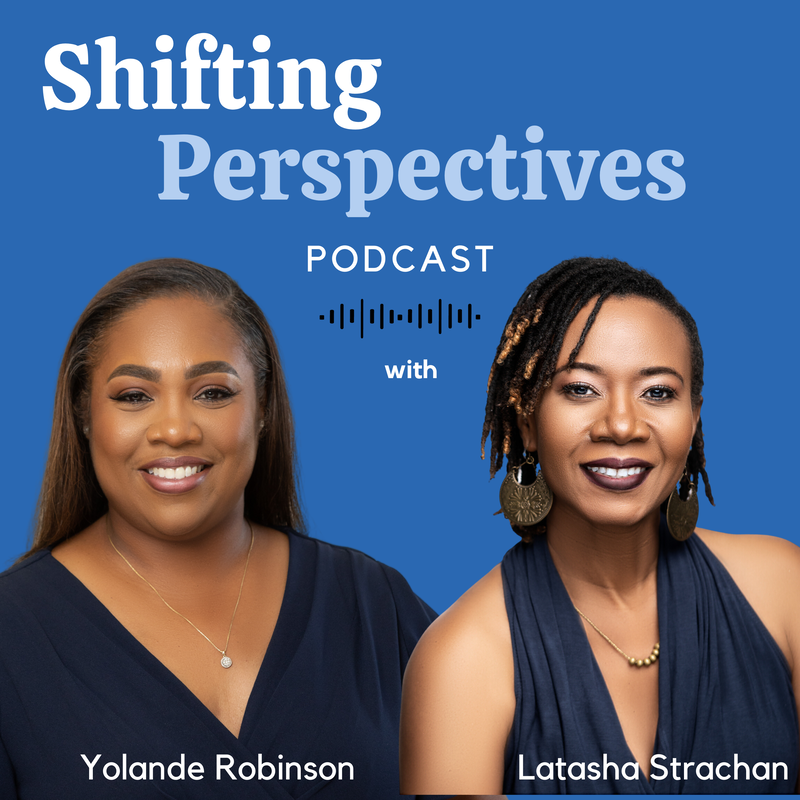
Shifting Perspectives is a conversation with Yolande and Latasha that challenges Listeners to fuel themselves with diversity in the way they think, the way they work, the way they parent and the way they live their lives.
Listen to Shifting Perspectives on Apple Podcasts, Audible, Amazon Music, Spotify, Google Podcast, Stitcher, Pocket Casts, Overcast, Castro, Castbooks, or Podfriend. Archives
October 2026
Categories
All
|
 RSS Feed